

SERVICES
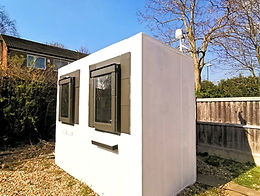
PassiHVAC offers a range of sustainability-focused services, encompassing-life carbon assessment, low-carbon design, energy modeling, studies, and environmental evaluations. Additionally, we provide consultancy services such as computational fluid dynamics (CFD) simulations and field testing for passive low-energy building solutions. Our advanced, fully modular field test room is designed to be retroitted with various products, supporting integrated passive building solutions.


Compliance & Sustainability
Energy Simulation and Statements
Dynamic modelling of energy demand, HVAC strategies and natural ventilation to optimise efficiency and comfort.
Assessment of residential energy ratings (EPC) and design compliance using the Standard Assessment Procedure for new builds and conversions.
Commercial SBEM Assessment
SBEM/DSM-based assessments to estimate building energy consumption and CO₂ emissions for regulatory compliance and EPC.
Overheating Assessment
Modelling and analysis of overheating risk in homes using TM59 guidance, with recommendations to improve comfort and compliance (Part O).
Life Cycle Assessment
Whole-building assessment of operational and embodied carbon throughout the building lifecycle.
Water Efficiency & Rainwater Harvesting
Assess water use, reuse potential and stormwater runoff strategies for sustainable water management.


Climate Analysis
Assess local climate and solar geometry, including solar radiation, temperature and other climatic data in relation to the building form and its context.
Shadow Analysis
Analyse overshadowing from neighbouring structures and the impact of your proposal on surrounding buildings and spaces.
Wind Comfort & Simulation
Model wind conditions before and after development to assess wind safety, natural ventilation potential and outdoor comfort.
Thermal Comfort
Indoor and outdoor thermal comfort assessments, considering shading, wind and temperature conditions.
Daylight & Sunlight Analysis
Evaluate natural light levels, glare risk and daylight access for planning and design, in line with BRE BR209 guidelines and BS EN 17037+A1.
Renewable Energy Feasibility
Evaluation of solar PV, wind and other renewable technologies to help offset building energy demand.
Parametric Assessment & Design Optioneering
Test multiple design options to balance daylight, energy, comfort and other environmental factors using parametric workflows.
Computational Fluid Dynamics (CFD) Services
CFD Modelling
High-resolution airflow and thermal simulations to assess wind behaviour, indoor air distribution, natural ventilation performance and thermal comfort.
Wind Conditions Analysis
Evaluation of external wind patterns, turbulence, acceleration zones and overall wind safety around buildings and public spaces.
Indoor Air Distribution
Assessment of airflow pathways, ventilation effectiveness and identification of stagnation zones for improved indoor environmental quality.
Natural Ventilation Performance
Analysis of pressure differentials, flow rates and ventilation routes to support low-energy cooling strategies and reduce reliance on mechanical systems.
Thermal Comfort Analysis
Simulation of temperature gradients, radiant effects and heat transfer to optimise comfort and energy performance across different spaces.
Microclimate Assessment
Investigation of how buildings interact with their surroundings, including impacts from adjacent structures, landscaping and ground-level conditions.


Field Testing & Innovation Facility
Field Test Facility
Our state-of-the-art, fully modular field test room allows full-scale evaluation of products and building systems. The facility can be retrofitted with a wide range of components to support technical validation and performance testing.
Building Energy Modelling & Prototype Evaluation
Simulation and assessment of prototype systems to measure performance, efficiency and integration potential within real or representative building conditions.
System Sizing for Passive & Low-Energy Solutions
Calculation and optimisation of system sizes to ensure passive and low-energy technologies operate effectively and meet design performance goals.
System Integration Analysis
Evaluation of how new products or systems can be integrated into any space, including compatibility, layout optimisation and operational considerations.
Support for Manufacturing & Product Refinement
Technical collaboration to refine system designs, inform manufacturing processes and enhance overall product performance prior to market deployment.